
Apedexalia
Industrial leaders discussing financial scenarios

Talk through your scenarios

You do not control the environment, but you control how you think about it

The useful myth is that someone, somewhere, has a precise model that will tell you exactly how your industrial business will perform. The reality is simpler and less glamorous. You make a series of decisions under uncertainty, with partial information, and you adjust as you learn. Scenario-based thinking does not change that fact, but it gives you a structure so those adjustments are calmer, faster, and easier to explain. If you want to stress-test a current decision, or sense-check how you are handling volatility in your Canadian operations, you can outline your situation and walk through a few scenarios with a neutral counterpart. The goal is not to sell you a product. It is to test whether your current structures and habits match the amount of movement you actually see on your plant floor and in your supply chain.
Reach out
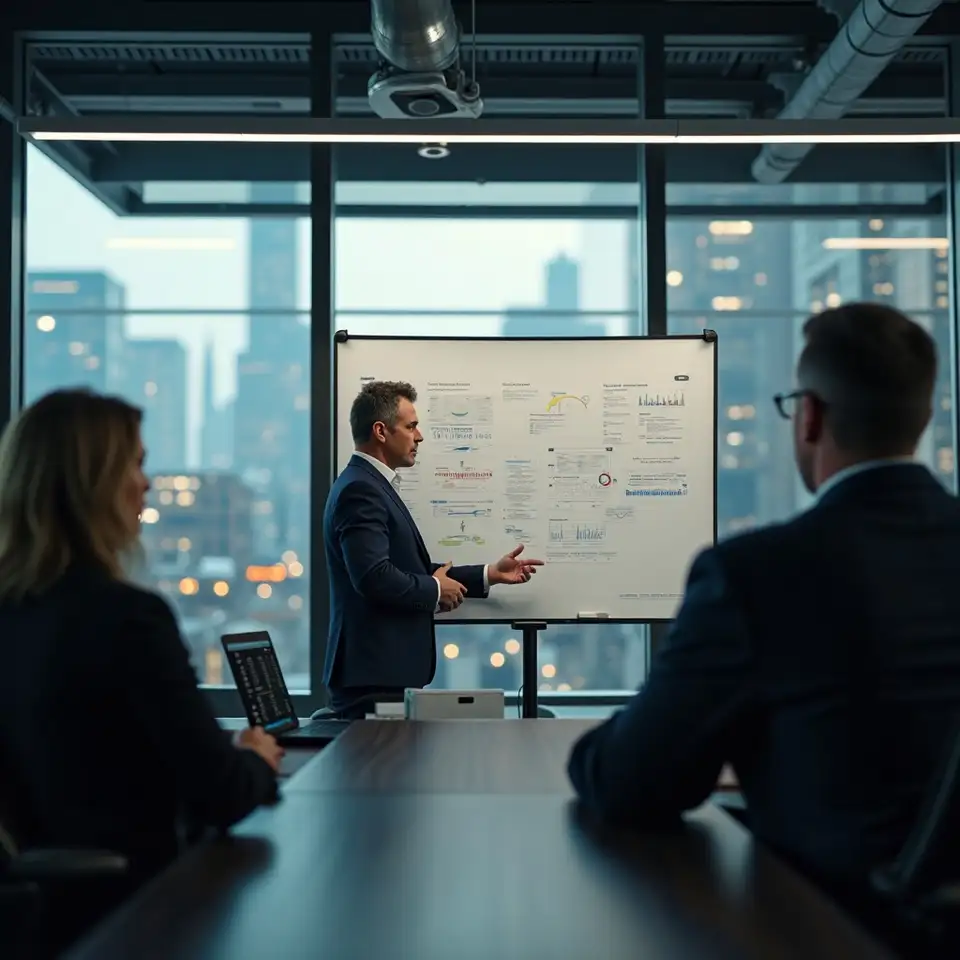
Applying scenario thinking on the plant floor

Imagine a quarter where demand jumps for one product line while another slows, a supplier misses two key shipments, and overtime starts to climb. None of this is unusual in industrial settings, yet many plans still assume a flat path. Scenario-based thinking treats this mix as standard and asks how your decisions hold up when the mix shifts. You start by drawing three quick pictures of the next period: a base case, a higher-demand case, and a disruption case. For each, you sketch changes in orders, labour, and inventory. Then you ask blunt questions: where does cash get tight, which assets become bottlenecks, and which commitments to lenders or suppliers might feel heavy. You do not need complex tools for this; a whiteboard and a simple cash outline are often enough to surface the main pressure points. From there, you look for actions that improve resilience across more than one scenario. That might mean modestly increasing flexible labour arrangements, adjusting reorder points, or clarifying contract terms that currently assume a smoother world than you live in. None of these moves promise specific outcomes, and results may vary, but together they give you more room to manoeuvre when the environment shifts. When you document this thinking, you keep it short. One page that lists scenarios, assumptions, key exposures, and potential responses is usually enough. This record becomes a reference point for future discussions, making it easier to explain why you took a particular path and to update your view when new information arrives, without rewriting history or claiming that you saw everything coming.

Scenario-based thinking for practical plant decisions

Handling industrial finance decisions when demand, supply, and labour refuse to sit still

Industrial manager mapping financial scenarios on whiteboard
Industrial teams are often told to plan as if the next year will follow a clean forecast. You know it rarely does. This page treats variability as normal and shows how to fold it into your financial thinking without drowning in complexity or pretending you can predict every twist.

You look at how changes in demand, supply reliability, and labour availability flow through to cash, capacity, and risk. Instead of chasing perfect numbers, you work with ranges and scenarios that can be updated quickly when new information arrives. The emphasis stays on decisions you control, not on guessing what markets will do next.

The ideas here are built for Canadian industrial settings, where regulatory expectations and financing norms matter, but plant reality moves faster. You see how to keep your notes short, your assumptions visible, and your options open, while reminding stakeholders that results may vary and that past performance does not guarantee future results.

Scenario thinking for industrial finance decisions

You already know your plant will not run in a straight line. Demand shifts, suppliers miss dates, and labour availability changes with little warning. This page shows you how to bring that reality into your financial decisions, using simple scenario thinking and cash discipline that you can explain in a short, direct conversation.

What you actually cover when conditions around your plant keep shifting

  • Translating operational scenarios into simple financial views: You start by defining a small set of scenarios that could realistically affect your plant over the next period, such as a volume increase, a slowdown, or a supply disruption. For each, you sketch how orders, overtime, and inventory would move, then translate that into a basic cash view. The goal is not precision but clarity about which levers matter most if conditions shift quickly.
  • Keeping cash decisions calm under changing conditions: You examine how to protect your ability to pay suppliers, staff, and lenders when numbers move away from your base case. This includes understanding payment terms, buffers, and where you have room to delay or accelerate spend. You focus on identifying a few practical actions you can take early, rather than hoping to solve everything when pressure is already high.
  • Discussing exposure and early signals in plain language: You explore how to discuss risk with owners and finance teams without drama or false confidence. That means being explicit about where you are exposed, what early signals you watch, and what you would consider doing if those signals appear. This approach accepts that results may vary and that no structure removes uncertainty, but it shows you are paying attention in a disciplined way.
  • Creating living documents for scenario-based decisions: You learn to record your scenario thinking on a single page that can be revisited later. This record shows what you assumed, what options you kept open, and how you planned to react if the environment moved. When conditions change, you can update this view quickly, which helps align operations, finance, and external partners around the same picture.

What this page focuses on

You learn how to handle financial decisions when the ground under your plant is moving. Instead of chasing precise forecasts, you work with a handful of realistic scenarios and see how each one affects cash, capacity, and risk exposure. You look at what happens when demand jumps, when a key supplier slips, or when input costs move in ways that squeeze margins. The emphasis is on building decisions that can flex, not on predicting which scenario will win. You also see how to document your thinking in a way that owners, lenders, and internal finance teams can follow without needing a long presentation. Throughout, there is a clear reminder that results may vary and that past performance does not guarantee future results, so you keep ambition in check with a steady view of uncertainty.

Why this approach fits volatile industrial environments

This page stays close to the moving parts that operators recognise: fluctuating orders, uncertain lead times, and changing labour capacity. Instead of offering bold predictions, it gives you a way to test your decisions against several plausible paths and to talk about those paths with finance partners in clear language. It avoids speculative products and keeps a steady reminder that past performance does not guarantee future results.

Why scenario thinking helps industrial teams

You cannot freeze your environment, but you can choose how you respond. Scenario-based thinking helps you keep decisions grounded, documented, and adaptable, without sliding into either panic or false certainty.

Scenario-led

Team-ready

Clear assumptions and options

Transparent

You make assumptions, exposures, and options visible instead of hiding them in dense reports. That transparency makes it easier for owners, lenders, and internal finance teams to see how you think, even when they disagree on pace or direction, and reinforces that no outcome is promised.

Using scenarios instead of single-point plans

Most industrial finance conversations still pretend the world will follow a single plan. You see it in budgets that assume one volume number, one price level, and one tidy installation date. Reality in a Canadian plant is less tidy. Orders move, suppliers miss, and labour constraints change with little warning. The question is not whether that volatility will appear, but how you will respond when it does. Scenario thinking offers a straightforward answer. Instead of betting everything on one forecast, you define a few plausible paths—strong demand, soft demand, and a disruption case—and ask how each would affect cash, capacity, and risk. You do not chase precision; you look for where decisions would stay sound across several paths and where they would become fragile quickly. This is less dramatic than a big bet, but it is usually how resilient plants are actually run. When you bring this into discussions with owners, lenders, or internal finance teams, you are clear that results may vary and that past performance does not guarantee future results. You are not offering certainty. You are showing that you have thought through what might happen and how you would react. That combination of humility about prediction and discipline about response is often what stakeholders are really looking for, even if they still ask for a single number on a slide.

What you gain by treating uncertainty as normal

You do not need a thick manual to deal with uncertainty. You need a repeatable way to ask better questions, sketch a few paths, and keep everyone aligned as conditions change around your plant.

Working with multiple plausible futures instead of one forecast

You learn to replace single-point plans with a small set of scenarios that reflect how your plant might actually run. For each, you map key operational changes and sketch how cash, capacity, and risk might respond. This approach does not predict outcomes, and results may vary, but it keeps you from anchoring on one fragile view of the future.

Scenarios

Keeping cash decisions practical under uncertainty

You focus on identifying where cash strain could appear if demand or supply shift, then list specific actions you could take early, such as adjusting orders, renegotiating terms, or rescheduling maintenance. The emphasis is on practical levers you already control, not on chasing precision in numbers that will change as soon as conditions move.

Cash

Documenting thinking so future reviews stay honest

You build a habit of writing short notes that capture your scenarios, assumptions, and early warning signals on a single page. These notes help align operations, finance, and external partners, and they create a record you can revisit when you evaluate how decisions played out, knowing that past performance does not guarantee future results.

Records